
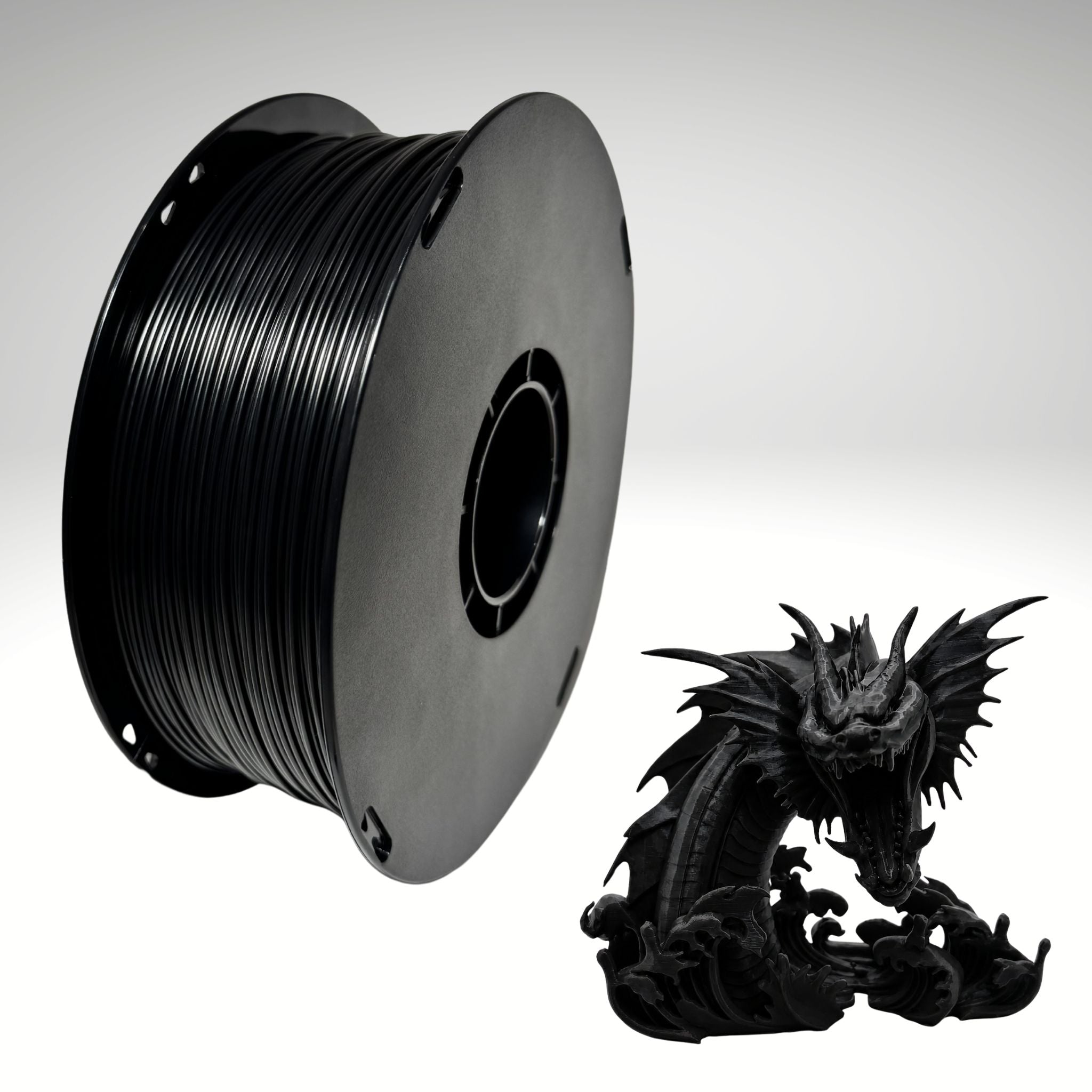
ABS 1kg with Standard Spool
Leviathan 3D ABS - Premium Australian Filament
When you need strength, heat resistance, and durability, ABS is the material of choice and Leviathan 3D ABS delivers it without compromise. Whether you're running a Bambu Lab, Creality, Prusa, or anything in between, our ABS drops straight in using standard profiles, zero dialing in required.
Why Leviathan 3D ABS:
- ±0.03mm laser-verified dimensional accuracy
- Premium precision winding - tangle and snag free
- Fully AMS compatible for multi-colour printing
- Vacuum sealed with humidity control desiccant for freshness
- Hand-inspected by our QC team before sealing
- Works in any FDM printer - open filament system friendly
- 1.75mm diameter, 1kg per spool
- Australian owned, fast shipping across Australia
Print settings:
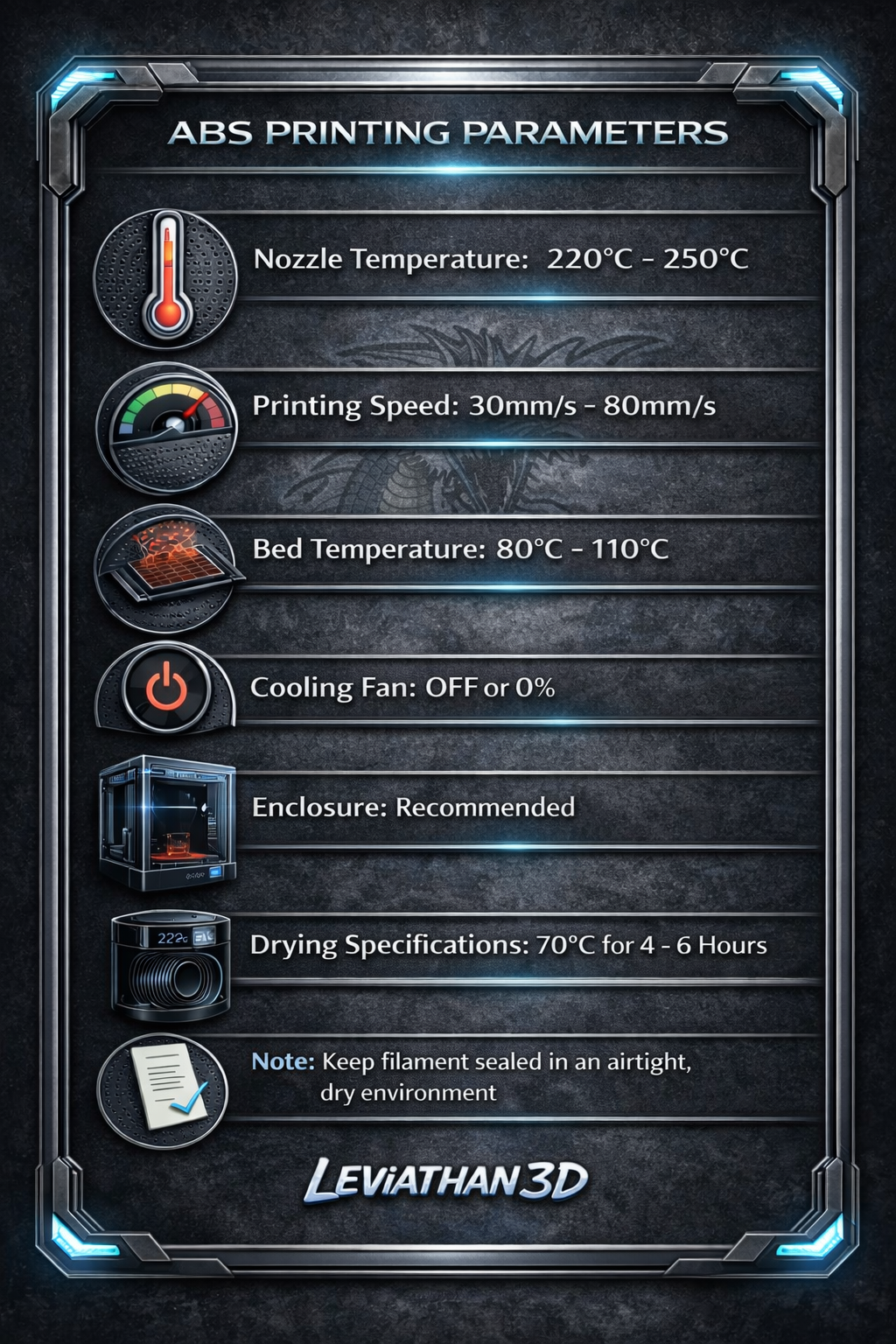
- Nozzle temp: 220-250°C
- Bed temp: 90-110°C (heated bed required)
- Enclosed printer recommended for best results
Free shipping on orders over $99
Pairs well with
In stock! Ships within 1-2 business days.
Vacuum-sealed freshness - every spool
100% QC tested before dispatch
Free standard shipping on orders over $99
ABS 1kg with Standard Spool
Checking dispatch times...
Stock up & save
Mix and match any spools - discount applies automatically at checkout
Add 3 spools to unlock 8% off - applied automatically at checkout.
Discount applied automatically at checkout - no code required
If you have any questions, you are always welcome to contact us. We'll get back to you as soon as possible, within 24 hours on weekdays.
-
Shipping Information
We dispatch all orders within 1–2 business days from our Australian warehouse. Standard delivery: 3–7 business days. Express shipping available at checkout. Free standard shipping on orders over $99 AUD.
-
Customer Support
Our team is available Monday–Friday, 9am–5pm AEST. Email us at support@leviathan3d.com.au and we'll respond within 1 business day. We're here to make every print a success.
-
FAQ’s
Find answers to common questions about print settings, material compatibility, storage, and Bambu Labs AMS support in the FAQ section on this page. Still need help? Email our team directly.
-
Contact Us
Email: support@leviathan3d.com.au - we respond within 1 business day (Mon–Fri). For print troubleshooting, include your printer model and a description of the issue for fastest support.
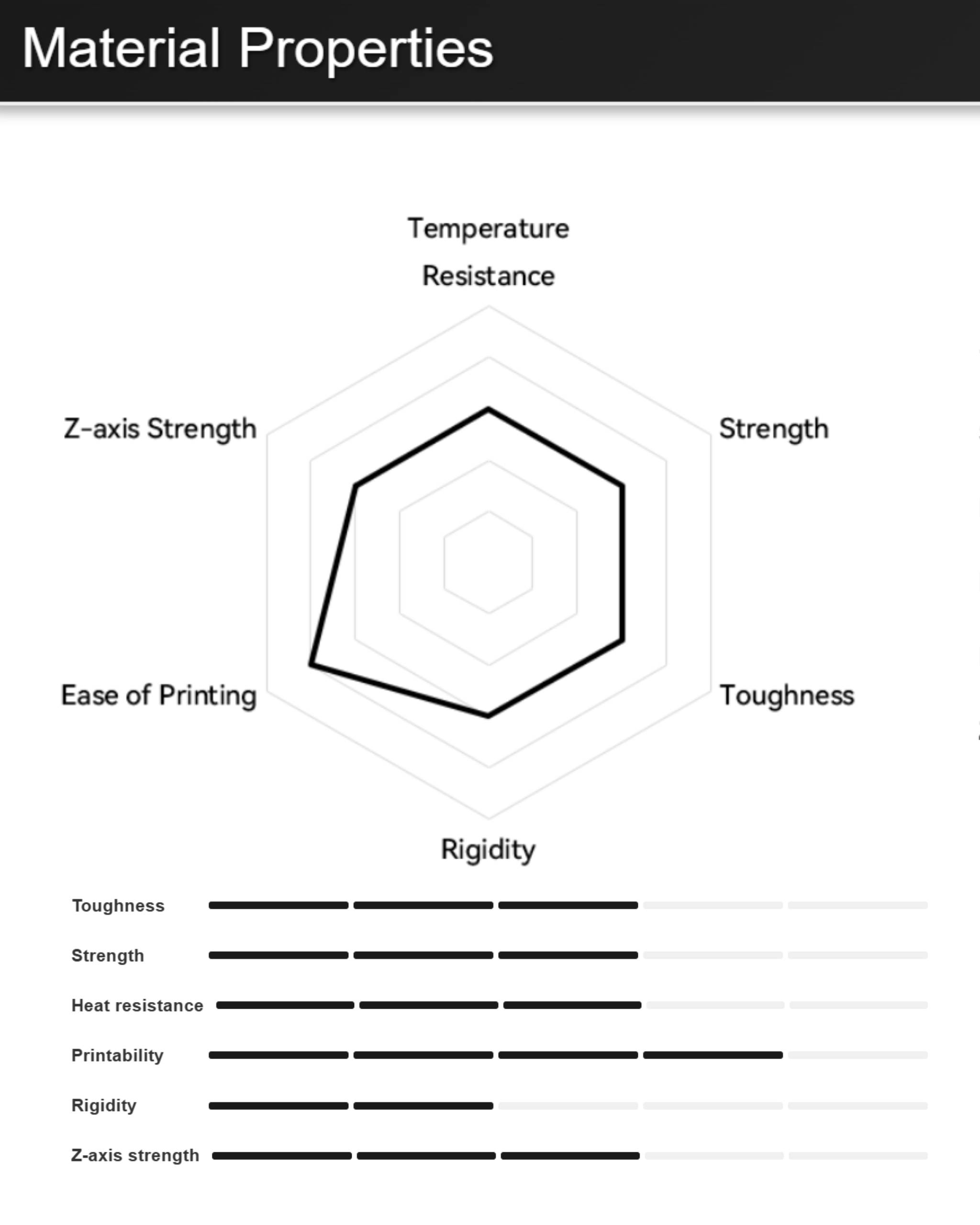
Precision-Made Filament · ±0.03mm Tolerance · AMS Compatible · Australian Brand · Vacuum Sealed
Product details
ABS Print Settings
Nozzle Temperature: 230–250°C
Bed Temperature: 100–110°C
Print Speed: 40–60mm/s
Cooling: Minimal - 0–20% fan
Bed Surface: PEI, ABS slurry, or Magigoo
Enclosure: Required - prevents warping and delamination
ABS demands a fully enclosed print environment. Avoid drafts. Print your first few layers slightly hotter (245–250°C) before settling to your target. ABS profiles are available natively in Bambu Studio for X1C and P1S users.
Technical Specifications
Material: ABS (Acrylonitrile Butadiene Styrene)
Diameter: 1.75mm (guaranteed ±0.03mm - manufactured to target ±0.02mm, laser-verified)
Spool Weight: 1kg net
Density: ~1.05 g/cm³
Tensile Strength: ~40 MPa
Elongation at Break: ~8%
Vicat Softening Point: ~100°C
Heat Deflection Temp: ~80–90°C
Packaging: Vacuum-sealed with desiccant
Storage & Handling
ABS is moderately hygroscopic. Store in a sealed container below 25°C with desiccant. If you suspect moisture absorption (bubbling, rough surfaces), dry at 70–80°C for 4–6 hours.
Pre-warming ABS on the spool before printing can improve first-layer adhesion. All Leviathan 3D ABS ships vacuum-sealed for guaranteed material integrity on arrival.
Shipping & Returns
Processing: Dispatched within 1–2 business days from our Australian warehouse.
Standard Shipping: 3–7 business days Australia-wide.
Express Shipping: Available at checkout.
Free Standard Shipping: On all orders over $99 AUD.
Returns: Contact us within 30 days of delivery. Defective products replaced at no cost. Change-of-mind returns accepted for unused, sealed spools.
FAQs
Please read our FAQs page to find out more.
Do I need an enclosure to print ABS?
Yes - an enclosure is strongly recommended for ABS printing. ABS shrinks significantly as it cools, and a temperature-controlled enclosure prevents the rapid heat loss that causes warping and layer separation (delamination). Without an enclosure, large ABS prints will almost always warp off the bed. The Bambu Labs X1C and P1S have built-in enclosures and are excellent choices for ABS printing.
How do I prevent ABS from warping?
The key to warp-free ABS printing: use an enclosure, set your bed to 100–110°C, and eliminate all drafts. Use a PEI sheet, ABS slurry (ABS dissolved in acetone), or a dedicated adhesive like Magigoo for bed adhesion. Avoid cooling fans or keep them at 0–20%. Print your brim or skirt to anchor the first layer. A pre-heated enclosure at 40–50°C before starting the print makes a significant difference.
What temperature should I print Leviathan 3D ABS at?
Leviathan 3D ABS prints best at a nozzle temperature of 230–250°C and a bed temperature of 100–110°C. Start at 240°C nozzle / 105°C bed and adjust based on your printer and enclosure setup. First layers can benefit from printing slightly hotter (245–250°C) before stepping down to your target temperature for the remainder of the print.
Can ABS be sanded, drilled, and acetone-smoothed?
Yes - ABS is one of the most post-processable 3D printing materials. It sands cleanly, drills and taps well, and accepts paint with light priming. ABS also responds to acetone vapour smoothing: expose your print to acetone vapour briefly (in a safe, ventilated environment) and the surface will melt slightly, fusing layer lines into a smooth finish. It can also be welded with acetone as an adhesive.
How does ABS compare to ASA for outdoor use?
Both ABS and ASA offer excellent heat resistance and impact strength. The key difference is UV stability: ASA is specifically formulated to resist UV degradation and will not yellow or become brittle in prolonged sunlight, while ABS can degrade over time outdoors. For any exterior application - outdoor signage, automotive parts, garden equipment - we recommend ASA. For enclosed or indoor engineering applications, ABS is an excellent and more cost-effective choice.
